Tampilkan postingan dengan label Aston Martin. Tampilkan semua postingan

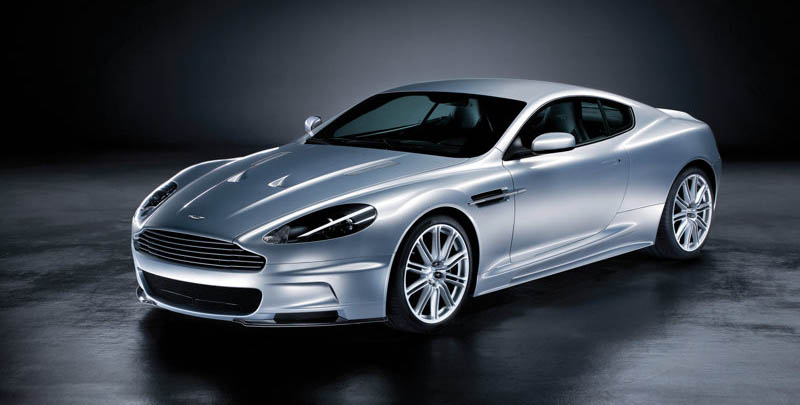
Aston Martin DBS Racing Green

Aston Martin DBS Racing Green


Aston Martin unveiled the most eagerly anticipated car of the year the new Aston Martin DBS at the Pebble Beach Concours d'Elegance on August 16th 2007, where the company took a starring role as the featured marque.

Aston Martin Chief Executive Officer, Dr Ulrich Bez, said: "The Aston Martin DBS is the ultimate expression of Aston Martin's engineering and technical ability. It offers pure performance without compromise. The Aston Martin DBS delivers the complete driving experience and bridges the gap between our road and track cars - the Aston Martin DB9 and Aston Martin DBR9."

A combination of elegant design, innovative manufacturing processes, race-derived materials and components and Aston Martin's unrivalled hand-build expertise makes the Aston Martin DBS a luxury sports car without equal. Every line, crease and curve conveys the enormous potential of the Aston Martin DBS, a seductive blend of refinement and raw power, provided by the hand-built V12 producing 380kW (510bhp/517PS), a top speed of 191mph (302km/h) and a 0-62mph (0-100km/h) time of 4.3 seconds.

Aston Martin DBS: Performance
At the heart of the Aston Martin DBS is a 6.0-litre V12 engine. The DBR9 and DBRS9 race cars are powered by an enhanced version of this same V12, tuned to produce in excess of 600bhp. The shared powerplant continues the strong link between Aston Martin's road and race cars, just as the six-cylinder engine used in the DBR1 also powered the Aston Martin DB4, DB5 and DB6 in the 1950s and 60s.

The new panel-making procedure delivers an industry-best surface finish, thanks to a patented 'Surface Veil' process. The application of a 200 micron layer of epoxy and glass to the panel delivers a class-A surface that is in line with Aston Martin's tradition of high-quality finishes. Inside the car, the weave patterns on the exposed carbon-fibre elements have been carefully selected to present the most harmonious surfaces.

Aston Martin DBS: Control
As with the DB9 and DBR race cars, the Aston Martin DBS benefits from the inherent characteristics of the VH architecture. The VH underframe consists of pressed, extruded and cast aluminium components, bonded together to create an immensely strong underlying structure.

This structure means that weight is kept to a minimum, with the front-mid mounted engine and rear-mid mounted transaxle ensuring a near perfect weight distribution: 85% of the car's weight is positioned within its wheelbase. The Aston Martin DBS's polar moment of inertia is therefore very low, producing a car with natural agility, a strong, stable platform for the V12's high power output and an exhilarating driving experience.

The damper settings are determined by an electronic control unit which takes sensor readings from the car's systems, including throttle position, brake position, steering wheel rotation and vehicle speed. This data establishes the prevailing driving conditions and the demands the driver is making on the car.

The Aston Martin DBS's Adaptive Damping System perfectly captures the car's sporting character, ensuring that stiffer dampers are available for better handling and control when the car is being driven enthusiastically, without compromising ride comfort during 'normal' driving conditions. A designated 'Track' mode automatically sets all dampers to their firmest positions, making it ideal for circuit driving. The Aston Martin DBS is fitted with Pirelli P-Zero tyres that have been developed especially for the car, along with new 20" lightweight alloy wheels.

Aston Martin DBS: Design
The Aston Martin DBS is manufactured using the finest materials, with a combination of hand-finishing and pioneering high-technology processes. From the exceptional quality of the design and finish to the advanced production techniques employed to save weight and create strength, the DBS is both a technological masterpiece and a powerful visual and tactile experience, inside and out.

The Aston Martin DBS is the culmination of the DB bloodline, a synthesis of race-bred technology and road-going practicality that can be traced back to the iconic Aston Martin DB2, DB3S and DB4 GT, and is continued today with the DBR9 and DBRS9 race cars. The DBS's powerful, flowing form fuses the visual language of the DBR9 GT1 race car with the innate elegance of the DB series. Lower and tauter than other Aston Martin production models, the DBS has subtly flared wheel arches accommodating standard 20" diameter wheels and tyres.

The interior of the Aston Martin DBS represents the epitome of Aston Martin's commitment to using materials honestly, without disguise or embellishment. Lightweight materials are used throughout to save weight; door pulls are made from carbon-fibre, for example, and the carpet has been woven with lighter fibres to save valuable kilograms. Special semi-aniline leather is used throughout the cabin, saving weight as well as giving a soft feel and distinctive aroma.

The combination of Kevlar and carbon-fibre provides crucial weight saving by allowing the structure of the seat to be incredibly slim: between 2.5mm and 3mm. Overall, the trimmed seat provides a weight saving of 20kg. The lightweight seats are a fixed structure, but can be adjusted for rake as well as sliding fore and aft.

The Aston Martin DBS start sequence blends tradition with high technology and a touch of theatre. The ignition ECU (Emotion Control Unit) has evolved into a machined and highly tactile polished sapphire ECU, incorporating a stainless steel inner case. Resembling a fine wristwatch or a piece of contemporary sculptural jewellery, this sapphire ECU epitomises the spirit of the Aston Martin DBS.

To operate the car, the sapphire ECU is inserted into a special docking station in Aston Martin's signature dashboard-mounted sapphire starter button, and glows red to indicate when the car is ready to start. The engine is fired by pressing the ECU flush with the surface of the starter button. After pressing to stop the engine, the ECU automatically motors out of the dashboard for removal.

The start sequence of the Aston Martin DBS is augmented by an all-new centre console design with a cast metal surround, crisp typography and new graphics. The new console has a traditional dial-face clock at the centre, flanked by two rotary controls for the heating and air-conditioning system, fashioned from solid, turned aluminium.

Aston Martin DBS Specification

aston martinBody
* Two-door coupe body style with 2+0 seating
* Bonded aluminium VH structure
* Aluminium, magnesium alloy and carbon-fibre composite body
* Extruded aluminium door side-impact beams
* High Intensity Discharge (HID) headlamps (main beam)
* LED rear lamps and side repeaters

Engine
* All-alloy, quad overhead camshaft, 48-valve, 5935cc V12.
* Compression ratio 10.9:1
* Front-mid mounted engine, rear-wheel drive
* Fully catalysed stainless steel exhaust system with active bypass valves
* Max power: 380kW (510bhp/517 PS) at 6500rpm
* Max torque: 570Nm (420 lb.ft) at 5750rpm
* Acceleration: 0-100 km/h (0-62mph) in 4.3 seconds
* Max speed: 302 km/h (191mph)

Transmission
* Rear-mid mounted, six-speed manual gearbox
* Alloy torque tube with carbon fibre propeller shaft
* Limited-slip differential
* Final-drive ratio 3.71:1

Wheels and Tyres
* Front: 8.5'' x 20'' Pirelli P Zero 245/35
* Rear: 11'' x 20'' Pirelli P Zero 295/30

Steering
* Rack and pinion, Servotronic speed-sensitive power-assisted steering, 3.0 turns lock-to-lock. Column tilt and reach adjustment

Suspension
* Front: Independent double wishbone incorporating anti-dive geometry, coil springs, anti-roll bare and monotube adaptive dampers
* Rear: Independent double wishbones with anti-squat and anti-lift geometry, coil springs, anti-roll bar and monotube adaptive dampers
* Adaptive Damping System (ADS) with Track mode

Brakes
* Front: Ventilated carbon ceramic discs, 398mm diameter with six-piston calipers
* Rear: Ventilated carbon ceramic discs, 360mm diameter with four-piston calipers
* Dynamic Stability Control (DSC) with Track mode
* Anti-lock Braking System (ABS)
* Electronic Brakeforce Distribution (EBD)
* Emergency Brake Assist (EBA)
* Traction control

Dimensions
* Length: 4721mm (185.9'')
* Wheelbase: 2740mm (107.9'')
* Width: 1905mm (75'') (exc. Mirrors) 2060mm (81.1'') (inc. Mirrors)
* Fuel tank capacity: 78 litres (17.2 Imp.galls, 20.5 US galls)
* Height: 1280mm (50.4'') Weight: 1695kg (3737lb)

Aston Martin Rapide


Aston Martin Rapide with my girls

OK am I seeing things!  didn't Lamborghini just come out with this car last year? The Lamborghini Estoque
I think the Aston Martin's design team need to come up with better ideas, Mercedes Benz already used up this design with the discontinues CLS model.
Lamborghini Estoque
Photo of the Lamborghini Estoque
Aston Martin has revealed its new DBS that goes on sale next year,  the company’s number one priority is developing the Rapide a four-door-coupe that will arrive in 2009 or 2010 and will cost around $400,000.
Aston Martin is working on a coupe architecture for a four-door sports car. much Like the Mercedes Benz  CLS models
But Aston Martin officals won’t reveal the car until they think it is absolutely ready.
While we expect the Rapide to be a totally bad ass car, we’re more excited about a new Aston Martin DBX.
Rumor has it that the DBX will be a successor to the Vanquish and may even be a mid-engined supercar based on the Prodrive 2.
 
 Aston Martin Rapide side view Aston Martin Rapide front hood Aston Martin Rapide overhead Aston Martin Rapide overhead doors open Aston Martin Rapide inside Aston Martin Rapide inside back seat view Aston Martin Rapide front

Aston Martin V8 Vantage Roadster

Aston Martin V8 Vantage Roadster


Aston Martin V8 Vantage - originally launched to widespread critical acclaim at the Geneva Motor Show in 2005 - is to receive significant technical enhancements, reaffirming the car's position as one of the world's most desirable and exhilarating sports cars.

While the universally distinctive and award-winning shape of the Aston Martin V8 Vantage is retained, the car benefits from a number of technical changes which include significantly up-rated engine performance from a new 4.7 litre power unit in both Coupe and Roadster variants. Other changes include revised dynamics to take full advantage of increased power and torque availability, improved Sportshift™ transmission software and a new sports suspension option.

The 4.7 litre V8 engine has a power output of 420bhp (an 11% increase on the previous 4.3 litre unit) and delivers peak torque of 470Nm (15% increase), providing the Aston Martin V8 Vantage with new reserves of mid-range performance, an improved 0-60mph time of 4.7 seconds and top speed of 180mph (288kph). Combined European fuel economy and CO2 emissions are also improved by 13% (Sportshift™).

Inside, the changes include a new centre console and revised switchgear and the introduction of an ECU replacing the previous V8 Vantage key. Externally, the acclaimed Aston Martin V8 Vantage design appearance is enhanced with a range of new standard and optional 19'' alloy wheels.

Engine
Improvements in performance have been achieved through a number of carefully developed changes to Aston Martin's acclaimed V8 engine.

The cylinder bore and stroke has been increased from 89mm to 91mm and 86mm to 91mm respectively, giving a total displacement of 4735cc.

The increase in cylinder bore is facilitated by a move to cylinder liners that are pressed into the pre-machined aluminium alloy block, allowing a thinner liner than was possible with the cast-in design of the 4.3 litre engine.

The new forged steel crankshaft provides the 91mm stroke and incorporates new holes in the counter weights for reduced rotating mass and improved inter-bay breathing. New forged steel con-rods and cast aluminium pistons complete the capacity-related changes.

Other key changes include efficiency improvements to the dry sump lubrication system, including a new sump casting with oil pick-up points moved from the front and rear to the sides of the sump. The cylinder heads are modified with a new intake port and an inlet valve size increase from 34.9mm to 35.9mm. The intake manifold has been modified to match the new port to optimise air flow.

Transmission
The Aston Martin V8 Vantage transmissions have also undergone changes to improve performance and to handle the increased levels of power and torque. Both the standard manual stick-shift gearbox and the optional Sportshift transmission benefit from a modified clutch and flywheel, reducing clutch pedal efforts and delivering a 0.5kg weight saving, reducing the rotating masses within the powertrain, and hence increasing engine responsiveness.

Aston Martin's Sportshift transmission has undergone a series of specific changes to broaden the capabilities of the gearbox to offer customers enhanced comfort and convenience with sporting capabilities. Changes include a revised control strategy, allowing the transmission, rather than the engine, to dictate how best the engine torque should be deployed to optimise performance and deliver power smoothly and consistently.

'Dual Throttle Map' software is also featured. When 'Comfort' mode is selected the engine reacts in a smoother more progressive manner to driver throttle inputs and in the default 'Sports' mode the throttle mapping is more aggressive, delivering a more dynamic and sporting feel.

Sportshift now also has the capability to take inputs from the steering wheel enabling the current gear to be held when the car is negotiating a corner and hill descent detection, allowing a low gear to be held, maximising the effects of engine braking.

Suspension
A series of improvements are introduced to the Aston Martin V8 Vantage chassis and suspension setup to deliver improved body control and low speed ride quality; enabling the driver to take full advantage of the increased performance potential.

A number of the improved components originally introduced on the Aston Martin V8 Vantage Roadster are now carried over to the Coupe, including revised upper damper mountings and bump stops. Additionally, the front spring rates are stiffened by 11% at the front and 5% at the rear.

Steering geometry is also modified to improve steering feel, while the front lower suspension arm compliance bushes are stiffened by 22% to provide enhanced steering response and handling.

The Aston Martin V8 Vantage also now benefits from Bilstein dampers as standard; these low-friction dampers provide improved levels of dynamic capabilities and further improve ride quality.

Design & Optional Equipment
Introduced as an option for both Coupe and Roadster variants is a new Sports Pack which comprises forged lightweight alloy wheels aiding a lower unsprung mass, re-tuned Bilstein dampers with improved dynamic response, up-rated springs and a revised rear anti-roll bar (Coupe only). The Sports Pack is intended to offer greater agility, high speed body control and precision feel for the most enthusiastic of drivers.

Though the award-winning exterior design of the Aston Martin V8 Vantage remains largely unchanged, a new 20-spoke 19'' alloy wheel is introduced as standard, with either diamond turned silver or graphite finishes available as options, affording customers maximum choice. Alternatively, as part of the Sports Pack option, a 5-spoke lightweight aluminium wheel will be provided.

In the cabin, a new centre console constructed from die cast zinc alloy with a graphite silver finish is introduced along with a new ECU - first seen on the Aston Martin DBS in 2007. The ECU - constructed from glass, polished stainless steel and polycarbonate - replaces the key used previously for the Aston Martin V8 Vantage. The revised car also includes a new Hard Disk Drive (HDD) Navigation System offering faster route processing, additional features and improved graphics. Full ipod/MP3 integration is retained as standard equipment.

First shown as a concept car at the 2003 North American International Auto Show in Detroit, the Aston Martin AMV8 Concept caused a worldwide sensation as it allowed Aston Martin to enter a new sector of the premium sports car market with a genuine alternative to other cars on offer. Deliveries of the Aston Martin V8 Vantage Coupe to customers began in late 2005, joined by a convertible sibling in 2007 when the Aston Martin V8 Vantage Roadster was launched. The car is hand built at Aston Martin's Headquarters at Gaydon, Warwickshire, UK and to date more than 10,000 have been delivered to customers around the world.

Performance
* Max speed: 180mph (290 km/h)
* Acceleration: 0-60mph 4.7 seconds
* 0-100km/h (62mph) 4.8 seconds
* Max power: 313kW (420bhp) @ 7000 rpm
* Max torque: 470 Nm (346 lb.ft) @ 5750 rpm

Aston Martin DBS

Aston Martin DBS, 2008


Aston Martin unveiled the most eagerly anticipated car of the year the new Aston Martin DBS at the Pebble Beach Concours d'Elegance on August 16th 2007, where the company took a starring role as the featured marque.

Equally at home on a twisting mountain circuit as on the open road, the DBS is a true thoroughbred. The Aston Martin DBS is a 6.0-litre V12 powered, race-bred, two-seater shaped by the aerodynamic demands of high performance, with an exquisite interior that marries beautifully hand-finished materials with the very latest in performance technology.

Performance
The need for high-performance stability, handling ability and low kerb weight defined the DBS's form and construction. Accordingly, the Aston Martin DBS becomes the first production Aston Martin to make extensive use of ultra-light carbon-fibre body panels. High levels of performance and control are delivered by the combination of inherent light weight, near-perfect weight distribution, a supremely powerful and flexible V12 engine, and a performance-honed six-speed transmission, together with new carbon ceramic brakes and an adaptive damper controlled suspension system.

At the heart of the Aston Martin DBS is a 6.0-litre V12 engine. The DBR9 and DBRS9 race cars are powered by an enhanced version of this same V12, tuned to produce in excess of 600bhp. The shared powerplant continues the strong link between Aston Martin's road and race cars, just as the six-cylinder engine used in the DBR1 also powered the Aston Martin DB4, DB5 and DB6 in the 1950s and 60s.

As with all current Aston Martins, the engine is hand-assembled at Aston Martin's dedicated engine facility in Cologne, Germany. The classic 6.0-litre V12 features a number of power-increasing enhancements. These include a 'by-pass' engine air intake port that opens above 5500rpm to allow more air into the engine, and re-profiled air inlet ports that further improve airflow into the combustion chamber. Combined with a compression ratio of 10.9:1, the result of these enhancements is prodigious power and torque: the Aston Martin DBS delivers 380 kW (510 bhp/517 PS) at 6500 rpm. The 3.71:1 final-drive ratio ensures that the additional power is usable, enhancing in-gear acceleration in particular.

A lightweight, rigid structure is the design engineer's ultimate goal, and achieving the right balance between strength and mass is crucial. Like the DB9 and its sibling DBR9 and DBRS9 race cars, the DBS uses Aston Martin's class-leading all-alloy VH (Vertical Horizontal) architecture, a lightweight bonded aluminium structure that provides outstanding strength and rigidity. Aston Martin's engineers have also employed advanced materials and processes to further reduce weight and increase the Aston Martin DBS's performance and dynamics.

Carbon-fibre panels are used for the boot enclosure, boot lid, door opening surrounds, front wings and bonnet, giving a saving of some 30kg over more conventional materials without any reduction in strength. "There are no restrictions on form or shape in using carbon-fibre," says Marek Reichman, Aston Martin's Design Director, "and the material allowed us to wrap bodywork around the 20" wheels and maintain the precise relationship between the wheel and the bodywork."

Each panel has been carefully sculpted to direct the airflow around the car, into the engine and to help cool the braking system. The carbon-fibre elements are produced using advanced manufacturing techniques developed from the aerospace and motorsport industries.

Control
As with the DB9 and DBR race cars, the Aston Martin DBS benefits from the inherent characteristics of the VH architecture. The VH underframe consists of pressed, extruded and cast aluminium components, bonded together to create an immensely strong underlying structure.

Design
The Aston Martin DBS is manufactured using the finest materials, with a combination of hand-finishing and pioneering high-technology processes. From the exceptional quality of the design and finish to the advanced production techniques employed to save weight and create strength, the DBS is both a technological masterpiece and a powerful visual and tactile experience, inside and out.

The Aston Martin DBS is the culmination of the DB bloodline, a synthesis of race-bred technology and road-going practicality that can be traced back to the iconic Aston Martin DB2, DB3S and DB4 GT, and is continued today with the DBR9 and DBRS9 race cars. The DBS's powerful, flowing form fuses the visual language of the DBR9 GT1 race car with the innate elegance of the DB series. Lower and tauter than other Aston Martin production models, the DBS has subtly flared wheel arches accommodating standard 20" diameter wheels and tyres. These provide excellent stability and grip, while giving the car a muscular and athletic stance that evokes the DBR9 and DBRS9. The design process involved continuous revision and honing of the Aston Martin DBS's surfaces, ensuring that the shapes and forms represent perfectly the car's inherent power, while never diluting the fundamental proportions that are the essence of every Aston Martin.

The external detailing reflects the power and dynamic abilities of the Aston Martin DBS, with revised inlets and enlarged grilles that deliver more air into the engine and increase its cooling capacity. Subtle design details include a new five-bar design for the polished alloy main grille, as well as two additional vents in the enlarged power bulge on the carbon-fibre bonnet. These vents are entirely functional, improving engine performance and efficiency, yet also communicating the increased power output of the uprated V12 engine.

The widened front and rear track improve handling and give the car a more muscular character. To accommodate this additional width, the surfaces of the wings have been sculpted and re-shaped with harder lines, which also serve to emphasise the car's strength and power. The lowered ride height is accentuated by the enhanced side sills, carefully profiled to improve aerodynamic performance and reduce drag along the flanks. The iconic Aston Martin side strake, a design feature of every DB car since the DB4, has been redesigned for the DBS, incorporating a side repeater formed by a bank of LEDs.

The interior of the Aston Martin DBS represents the epitome of Aston Martin's commitment to using materials honestly, without disguise or embellishment. Lightweight materials are used throughout to save weight; door pulls are made from carbon-fibre, for example, and the carpet has been woven with lighter fibres to save valuable kilograms. Special semi-aniline leather is used throughout the cabin, saving weight as well as giving a soft feel and distinctive aroma.

The DBS features unique primary controls, including a new steering wheel profile with a twin-stitched detail marker that indicates the 'on-centre' position. The gear knob is fashioned from polished alloy to echo the metallic finishes on the new centre console. The instrument cluster is designed with white numerals on a dark graphite background for excellent legibility. The twin-stitch pattern runs through the interior as a signature device; the alignment of both stitch lines is testament to Aston Martin's ongoing tradition of exceptional craftsmanship.

Aston Martin DBS Specification

Body
* Two-door coupe body style with 2+0 seating
* Bonded aluminium VH structure
* Aluminium, magnesium alloy and carbon-fibre composite body
* Extruded aluminium door side-impact beams
* High Intensity Discharge (HID) headlamps (main beam)
* LED rear lamps and side repeaters

Engine
* All-alloy, quad overhead camshaft, 48-valve, 5935cc V12.
* Compression ratio 10.9:1
* Front-mid mounted engine, rear-wheel drive
* Fully catalysed stainless steel exhaust system with active bypass valves
* Max power: 380kW (510bhp/517 PS) at 6500rpm
* Max torque: 570Nm (420 lb.ft) at 5750rpm
* Acceleration: 0-100 km/h (0-62mph) in 4.3 seconds
* Max speed: 302 km/h (191mph)

Transmission
* Rear-mid mounted, six-speed manual gearbox
* Alloy torque tube with carbon fibre propeller shaft
* Limited-slip differential
* Final-drive ratio 3.71:1

Wheels and Tyres
* Front: 8.5'' x 20'' Pirelli P Zero 245/35
* Rear: 11'' x 20'' Pirelli P Zero 295/30

Steering
* Rack and pinion, Servotronic speed-sensitive power-assisted steering, 3.0 turns lock-to-lock. Column tilt and reach adjustment

Suspension
* Front: Independent double wishbone incorporating anti-dive geometry, coil springs, anti-roll bare and monotube adaptive dampers
* Rear: Independent double wishbones with anti-squat and anti-lift geometry, coil springs, anti-roll bar and monotube adaptive dampers
* Adaptive Damping System (ADS) with Track mode

Brakes
* Front: Ventilated carbon ceramic discs, 398mm diameter with six-piston calipers
* Rear: Ventilated carbon ceramic discs, 360mm diameter with four-piston calipers
* Dynamic Stability Control (DSC) with Track mode
* Anti-lock Braking System (ABS)
* Electronic Brakeforce Distribution (EBD)
* Emergency Brake Assist (EBA)
* Traction control

Dimensions
* Length: 4721mm (185.9'')
* Wheelbase: 2740mm (107.9'')
* Width: 1905mm (75'') (exc. Mirrors) 2060mm (81.1'') (inc. Mirrors)
* Fuel tank capacity: 78 litres (17.2 Imp.galls, 20.5 US galls)
* Height: 1280mm (50.4'') Weight: 1695kg (3737lb)

Aston Martin DB9 LM

Aston Martin DB9 LM, 2008


Aston Martin is not only showing the DBS for the first time in Europe at the Frankfurt motor show but showcase two new special editions - the Aston Martin DB9 LM and the Aston Martin V8 Vantage N400. Both special editions draw inspiration from the company's recent achievements at Le Mans and the N?rburgring 24-hour races.

The Aston Martin DB9 LM celebrates Aston Martin's GT1 class victory in the Le Mans 24-hour endurance classic in June with the Aston Martin DBR9 - a race car derived from the Aston Martin DB9.

This special edition car, available in Coupe form only with Touchtronic transmission, includes a unique Sarthe Silver exterior paint finish, meshes and rear crossbar finished in Magnum Silver and red brake calipers. Inside, the Aston Martin DB9 LM is fitted with handcrafted black leather finish, perforated leather inserts, unique 'Tertre Rouge' facia trim and numbered sill plaque. The car is also equipped with the normally optional DB9 Sports Pack as standard, with colour keyed and diamond turned alloy wheels.
Related Posts Plugin for WordPress, Blogger...